ILORIN, KWARA STATE - April 27, 2026
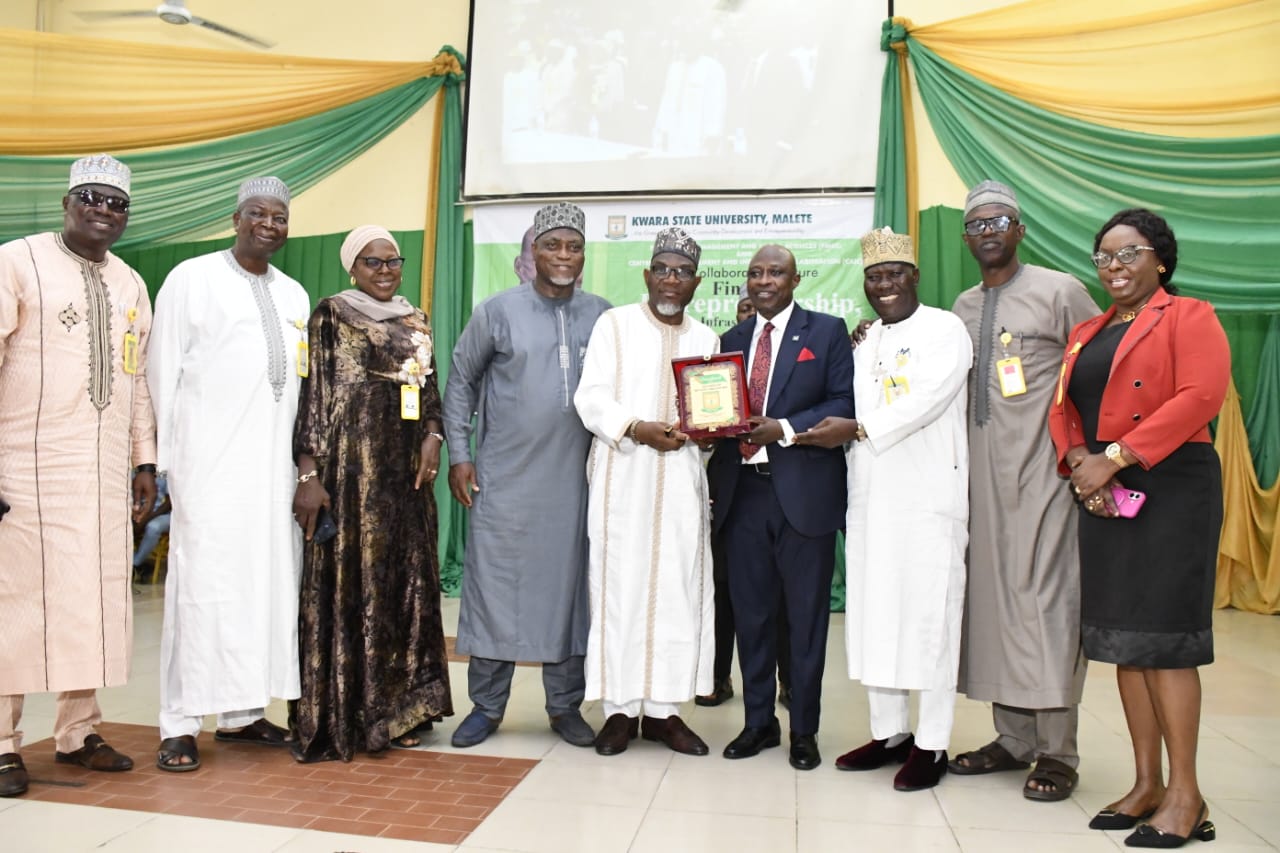
CRC Credit Bureau Limited, Nigeria’s largest and Africa’s foremost credit bureau, today recorded a significant milestone as its MD/CEO, Dr. Ahmed ‘Tunde Popoola, FCA, FCIB, delivered the inaugural Collaborative Lecture of the Faculty of Management and Social Sciences (FMSS) and the Centre for Advancement and Industrial Collaboration (CAIC) at Kwara State University (KWASU), Malete.
The lecture, titled “Finance, Entrepreneurship, and the Infrastructure of Trust,” convened a distinguished audience of academics, policymakers, and financial sector leaders at the KWASU Lecture Hall. The event was graced by the Vice Chancellor of KWASU, Professor Shaykh-Luqman Jimoh, alongside the Vice Chancellor of the University of Ilorin, Professor Wahab Olasupo Egbewole, SAN, as well as an esteemed gathering of professors, senior academics, students and industry executives from across Nigeria.
In his address, Dr. Popoola emphasised the transformative role of credit in economic development, noting that, “Credit is not just about borrowing. It is the infrastructure of opportunity, a bridge that connects where you are today to where you have the potential to be. Nigeria has the institutions. We must now build the data ecosystem to unlock them.”
The lecture marked the operationalisation of the Memorandum of Understanding signed between CRC Credit Bureau and KWASU in January 2026, which is designed to strengthen the link between academic research and financial industry practice. Under this partnership, CRC Credit Bureau will provide anonymised credit data to support research and the development of evidence-based policies on access to finance in Nigeria. Dr. Popoola’s participation followed a formal invitation by the Vice Chancellor of KWASU after an institutional visit to CRC’s Lagos headquarters earlier in the year. The event also represents KWASU’s first Collaborative Lecture initiative, signalling the university’s commitment to fostering industry-relevant scholarship and practical engagement.
Professor Shaykh-Luqman Jimoh, Vice Chancellor of Kwara State University, described the lecture as a defining moment for the institution and its broader mission. He stated, “KWASU is delighted to host Dr. Popoola for this landmark lecture. The collaboration between our university and CRC Credit Bureau, the largest credit bureau in Nigeria, is a model for how academia and industry should work together to solve Nigeria’s most pressing development challenges. Access to finance is not merely an economic issue, it is a social justice issue.”
Similarly, Professor Wahab Olasupo Egbewole, SAN, Vice Chancellor of the University of Ilorin emphasised the importance of cross-sector collaboration in preparing future leaders, noting, “The University of Ilorin is proud to be represented at this pioneering event. Collaborative platforms between universities and financial institutions are essential to equipping our graduates with the skills and knowledge to participate meaningfully in Nigeria’s evolving digital economy.”
Throughout the lecture, Dr. Popoola provided a comprehensive analysis of Nigeria’s credit landscape, underscoring the urgent need for systemic reforms. He noted that Nigeria’s credit penetration remains significantly low at approximately 13 percent of GDP, compared to a global average of 91 percent and a Sub-Saharan African average of 30 percent. He further highlighted the country’s substantial SME financing gap, estimated at US$32.3 billion, despite the critical role SMEs play in contributing to national GDP and employment. According to him, technology and data are rapidly transforming credit access through innovations such as Open Banking, artificial intelligence-driven credit scoring, and alternative data models.
Central to his presentation was the concept of the “Infrastructure of Trust,” which he described as the integrated system of financial institutions, identity frameworks such as BVN and NIN, credit bureaus, rating agencies, payment systems, collateral registries, and regulatory structures that collectively enable efficient credit markets. He stressed that while government credit interventions may be well-intentioned, they have historically achieved limited impact, and that sustainable access to finance must be driven by robust, market-based financial infrastructure supported by reliable data.
Dr. Popoola also highlighted the significant progress made by CRC Credit Bureau since its establishment. He noted that the organisation now maintains credit profiles for over 60 million Nigerians and has played a critical role in deepening credit bureau penetration from less than 5 percent in 2009 to over 40 percent today. He further observed that credit to the private sector has grown substantially in recent years, while non-performing loan ratios have declined markedly, demonstrating the effectiveness of structured credit reporting systems.
Reinforcing his message, Dr. Popoola stated that access to finance is increasingly determined by data visibility within the financial ecosystem. He urged individuals and businesses to build credibility through consistent and responsible financial behaviour, noting that digital and transactional data now serve as key determinants of creditworthiness.
In his recommendations, he called on policymakers to establish a unified national framework for access to finance, strengthen identity systems, and promote broader data sharing across critical sectors, while ensuring strict adherence to data protection regulations. He encouraged academics and researchers to leverage available data to evaluate financial interventions and contribute to policy development. He also advised entrepreneurs to adopt formal financial channels, deliberately build their credit profiles, and recognise the growing importance of digital footprints in accessing finance.
CRC Credit Bureau Limited, incorporated in 2006 and licensed by the Central Bank of Nigeria in 2009, remains at the forefront of Nigeria’s credit ecosystem and remains the largest Credit Bureau in Nigeria & Africa with over 60 million data subjects and 160 million credit facility records, the company provides critical credit information services to financial institutions, fintechs, and businesses. CRC is owned by leading Nigerian banks alongside Dun & Bradstreet, a global leader in business data and analytics, and operates under the National Credit Reporting Act, 2017. The organisation remains committed to advancing financial inclusion and supporting economic growth across Nigeria and Africa.