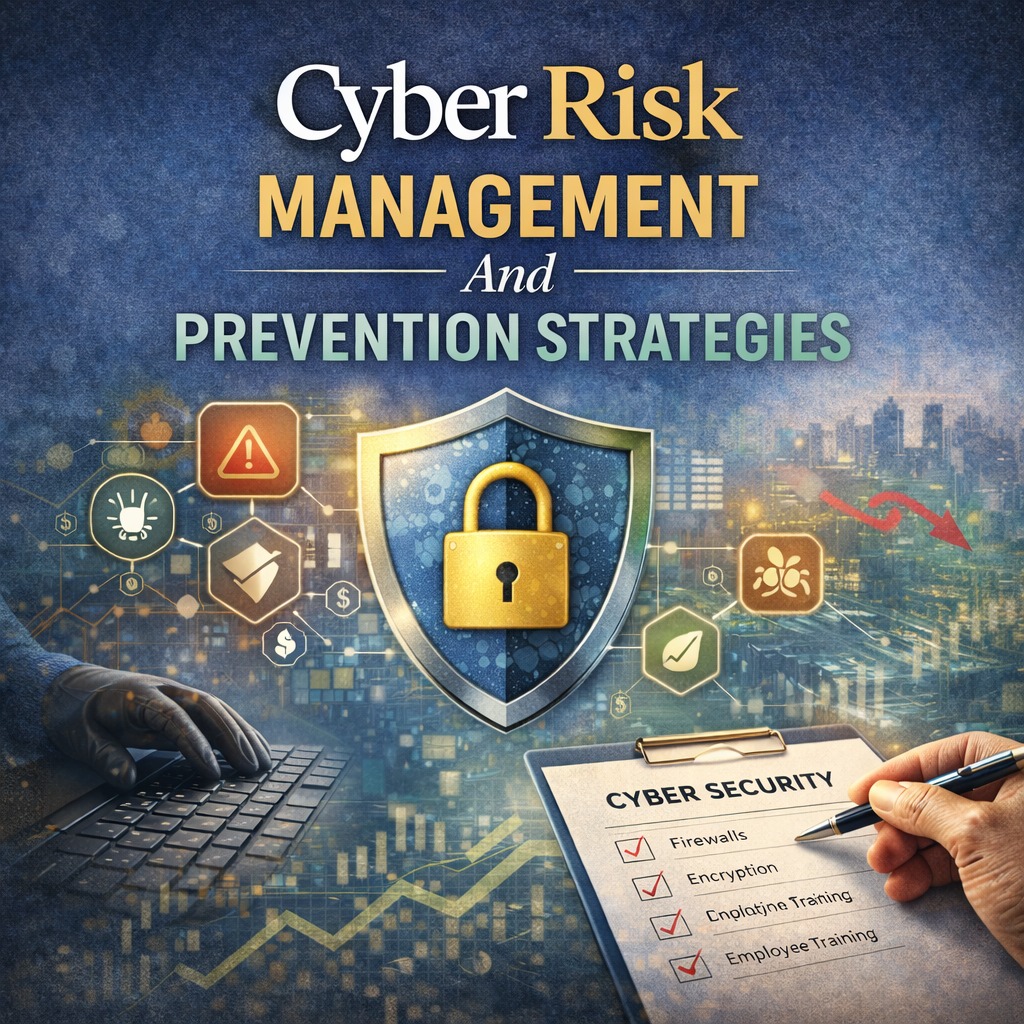
Course Description
| Target Audience | Risk management and compliance professionals, IT and information security staff, Managers and team leaders, Business continuity and operational staff, Internal auditors, Senior executives and decision-makers, non-technical staff with cyber risk responsibilities |
INTRODUCTION
Cyber threats are no longer just an IT problem; they are a business risk. Organizations of all sizes face cyber-attacks that can disrupt operations, damage reputations, and result in serious financial losses. As technology evolves, so do the tactics used by cyber criminals, making it essential for organizations to understand cyber risks and manage them proactively.
This 3-day training is designed to help participants understand cyber risks in simple, practical terms and learn effective strategies to prevent, detect, and respond to cyber threats. The course focuses on real-world scenarios, practical controls, and clear decision-making rather than technical jargon. Participants will leave with a stronger awareness of cyber risks and practical tools to protect their organizations.
COURSE OBJECTIVES
By the end of this 3-day training, participants will be able to:
- Understand common cyber threats and their impact on organizations
- Identify cyber risks across people, processes, and technology
- Apply cyber risk management frameworks and best practices
- Implement practical cyber prevention and protection measures
- Respond effectively to cyber incidents and reduce damage
- Promote a strong cyber security culture within their organization
COURSE OUTLINE
Module 1: Introduction to Cyber Risk Management
- What cyber risk means in today’s business environment
- Why cyber security is a business and leadership issue
- Key Cyber Risk Concepts and terminology
- Real-life cyber incidents and lessons learned
Module 2: Common Cyber Threats and Attack Methods
- Malware, ransomware, phishing, and social engineering
- Insider threats and human error
- Emerging cyber threats and trends
- How attackers exploit weaknesses
Module 3: Cyber Risk Assessment and Identification
- Identifying critical assets and information
- Understanding vulnerabilities and threats
- Conducting basic cyber risk assessments
- Prioritizing risks based on impact and likelihood
Module 4: Cyber Risk Management Frameworks and Standards
- Overview of common frameworks (e.g., ISO 27001, NIST)
- Risk-based approach to cyber security
- Policies, procedures, and governance structures
- Aligning cyber security with business goals
Module 5: Cyber Prevention and Security Controls
- Technical, administrative, and physical controls
- Access control and identity management
- Network and system security basics
- Data protection and encryption fundamentals
Module 6: Managing Human Risk and Cyber Awareness
- The human factor in cyber security
- Phishing awareness and social engineering prevention
- Building a cyber-aware workforce
- Roles and responsibilities of staff
Module 7: Third-Party and Vendor Cyber Risk Management
- Risks from suppliers, vendors, and partners
- Assessing and monitoring third-party cyber risks
- Contractual and compliance considerations
- Managing outsourced services securely
Module 8: Cyber Risk Monitoring and Early Detection
- Continuous monitoring and threat detection
- Security alerts and warning signs
- Logging, monitoring, and basic analytics
Responding to suspicious activities
Module 9: Cyber Incident Response Planning
- Preparing for cyber incidents
- Incident response roles and communication
- Containment, investigation, and escalation
- Minimizing business disruption
Module 10: Business Continuity and Disaster Recovery
- Relationship between cyber risk and business continuity
- Data backups and recovery strategies
- Testing and maintaining recovery plans
- Lessons learned from real incidents
Module 11: Legal, Regulatory, and Compliance Considerations
- Data protection and privacy obligations
- Reporting cyber incidents to regulators
- Managing legal and reputational risks
- Documentation and evidence handling
Module 12: Building a Resilient Cyber Risk Strategy
- Measuring cyber risk maturity
- Continuous improvement and lessons learned
- Integrating cyber risk into enterprise risk management
- Creating a long-term cyber resilience roadmap
Course Details
- Duration: 3 days
-
Available Formats:
- Physical Attendance - ₦260,000
- Virtual Attendance - ₦220,000
-
Available Dates:
- Mar 09, 2026
- Jul 27, 2026