Course Description
| Target Audience | Credit officers and credit analysts, Relationship managers and account officers, Risk management and risk control staff, Credit administration and documentation teams, Credit review and internal audit staff, Operations staff supporting lending activities, Supervisors and team leaders in lending institutions |
INTRODUCTION
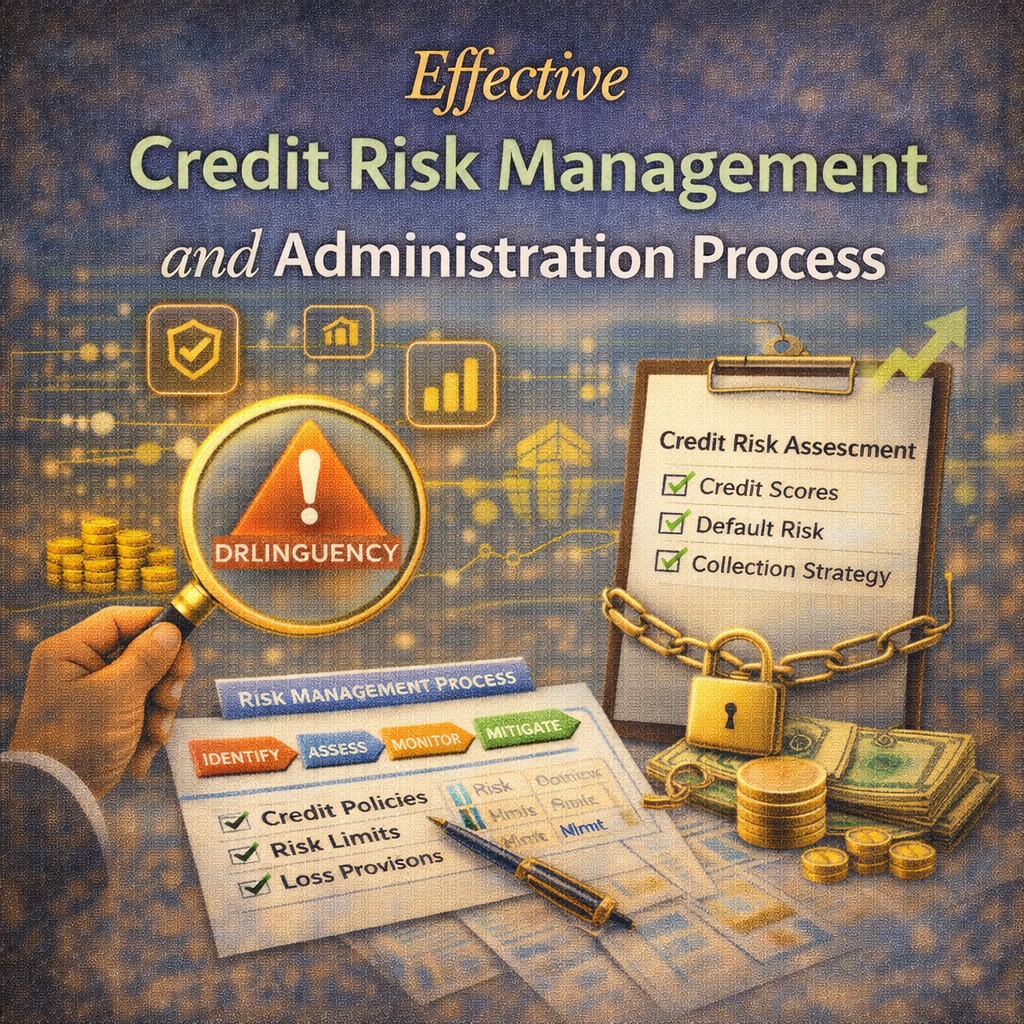
Credit risk does not fail because of lack of policies; it fails because of weak execution. Many institutions have well-written credit manuals but still suffer from poor asset quality, rising defaults, and avoidable losses. The gap is usually found in how credit risk is managed and administered daily.
This one-day programme is designed to strengthen the practical understanding of credit risk management as an operational process, not just a theoretical function. It focuses on how credit is assessed, approved, documented, monitored, controlled, and reported across its entire life cycle.
Participants will gain a clear understanding of where credit processes commonly break down, how administrative weaknesses increase risk exposure, and what must be done to maintain discipline, accountability, and consistency in credit decisions.
COURSE OBJECTIVES
By the end of this programme, participants will be able to:
• Understand credit risk as a process rather than a single approval event
• Apply sound credit risk principles in daily decision-making
• Identify weaknesses in credit administration that increase exposure
• Improve documentation, controls, and approval discipline
• Strengthen monitoring and reporting practices
• Reduce avoidable credit losses through better process management
COURSE OUTLINE
MODULE 1: FOUNDATIONS OF CREDIT RISK MANAGEMENT
• Understanding credit risk in practical terms
• Difference between risk identification and risk control
• Roles and responsibilities in the credit process
• Common misconceptions in credit risk management
• Why good intentions fail without structure
MODULE 2: CREDIT APPRAISAL AND APPROVAL DISCIPLINE
• Key elements of sound credit appraisal
• Assessing borrower capacity, character, and conditions
• Avoiding approval bias and pressure-driven decisions
• Approval authorities and segregation of duties
• Maintaining consistency in credit decisions
MODULE 3: CREDIT ADMINISTRATION AND DOCUMENTATION
• Importance of proper documentation in risk control
• Common documentation gaps and their consequences
• Conditions precedent and post-approval compliance
• Security perfection and custody management
• Administrative controls that protect the institution
MODULE 4: CREDIT MONITORING AND CONTROL
• post-disbursement risk responsibilities
• Account conduct monitoring
• Early warning signals and exception tracking
• Review cycles and credit file maintenance
• Managing deviations from approved terms
MODULE 5: PROBLEM CREDIT IDENTIFICATION
• Recognizing early signs of deterioration
• Technical issues versus fundamental credit problems
• Internal reporting and escalation processes
• Role of credit administration in problem detection
• Timely intervention to limit exposure
MODULE 6: CREDIT RISK REPORTING AND PROCESS IMPROVEMENT
• Purpose of credit risk reporting
• Key reports for management decision-making
• Using data to improve credit processes
• Learning from past credit failures
• Strengthening credit culture through discipline
Course Details
- Duration: 1 days
-
Available Formats:
- Physical Attendance - ₦69,000
- Virtual Attendance - ₦54,000
-
Available Dates:
- Feb 02, 2026
- Jun 05, 2026
- Jun 30, 2026