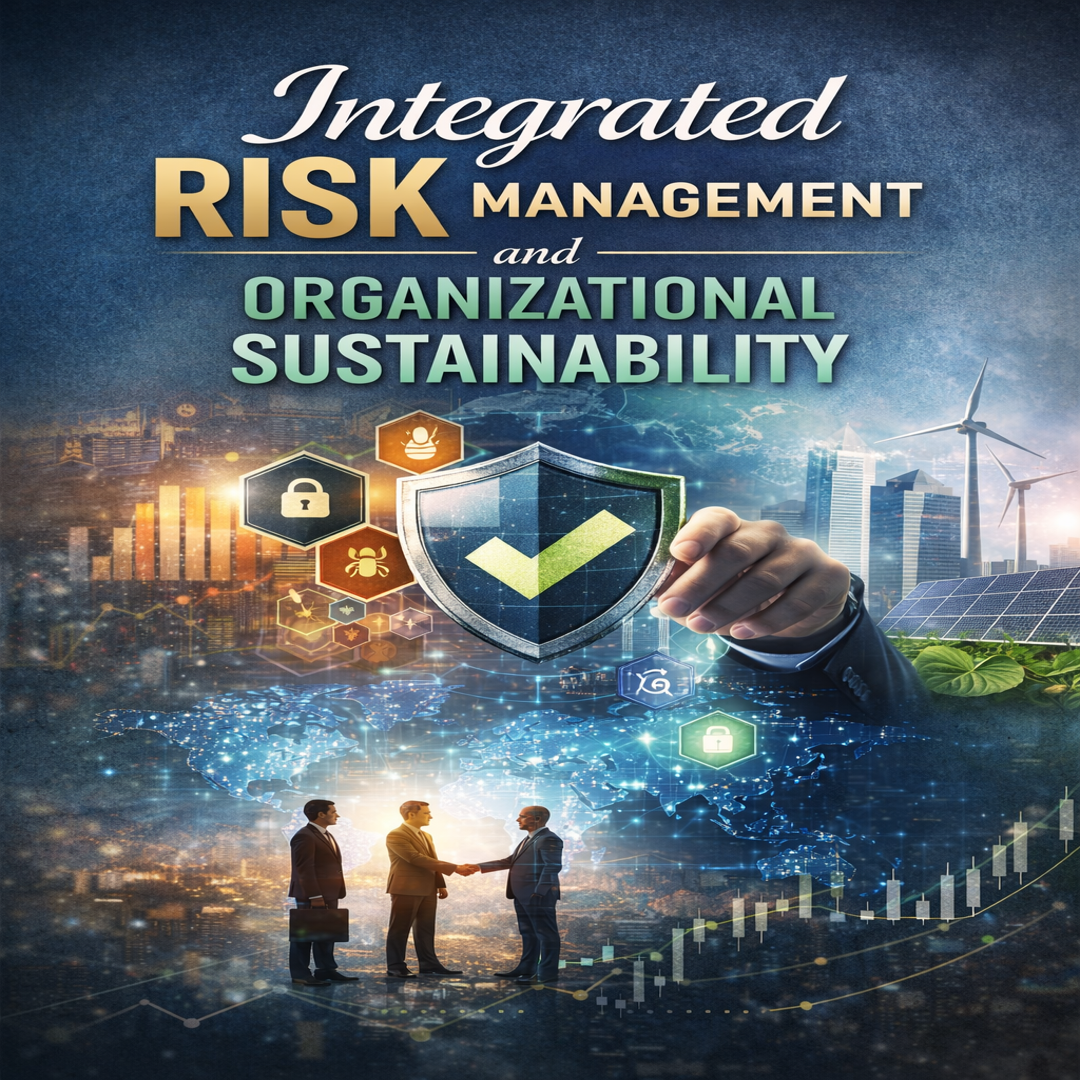
Course Description
| Target Audience | Board Members and Senior Management, Risk Management Professionals, Compliance and Internal Audit Officers, Business Unit Heads and Managers, Sustainability and ESG Officers, Strategy and Performance Managers, Project and Programme Managers, Public and Private Sector Organizations |
INTRODUCTION
Complex and uncertain business environment is not a new phenomenon to the business world. Organizations are exposed to a wide range of risks strategic, operational, financial, regulatory, environmentally, and even reputational. To achieve long-term success and sustainability, organizations must adopt an integrated approach to risk management that supports strategy, performance, and resilience.
This two-day training is designed to help participants understand how integrated risk management supports organizational sustainability. The training goes beyond theory, focusing on practical tools and leadership actions that help organizations anticipate risks, respond effectively to change, and embed risk awareness into everyday decision-making. Participants will gain insights into aligning risk management with strategy, governance, and sustainability objectives.
COURSE OBJECTIVES
By the end of this training, participants will be able to:
Understand the concept of integrated risk management
Identify and assess key risks across the organization
Link risk management to strategy and performance
Strengthening governance and accountability for risk
Support organizational sustainability and resilience
Apply risk management tools in real business situations
Improve risk-informed decision-making
COURSE OUTLINE
Module 1: Understanding Integrated Risk Management
What integrated risk management means
Evolution from traditional to integrated risk approaches
Benefits of integration for organizational performance
Common risk management challenges
Module 2: Risk, Strategy, and Organizational Sustainability
Linking risk management to strategic objectives
Understanding sustainability in a risk context
Balancing risk, opportunity, and performance
Long-term value creation
Module 3: Risk Governance and Leadership
Roles of the board and senior management
Risk ownership and accountability
Risk committees and governance structures
Leadership behaviors that support risk culture
Module 4: Risk Identification Across the Organization
Identifying strategic, operational, financial, and compliance risks
Emerging and external risks
Tools and techniques for risk identification
Understanding interdependencies between risks
Module 5: Risk Assessment and Prioritization
Assessing likelihood and impact
Risk scoring and prioritization
Risk appetite and tolerance
Focusing on what matters most
Module 6: Risk Response and Control Strategies
Risk treatment options: avoid, reduce, transfer, accept
Designing effective controls
Integrating controls into business processes
Cost–benefit considerations
Module 7: Integrating Risk Management into Operations and Projects
Embedding risk into daily operations
Risk management in projects and initiatives
Performance monitoring and risk indicators
Using risk information for decision-making
Module 8: Risk Culture and Organizational Behavior
Understanding Risk Culture
Encouraging risk awareness and ownership
Communication and training
Overcoming resistance to risk management
Module 9: Sustainability, Resilience, and Emerging Risks
Environmental, social, and governance (ESG) risks
Climate and sustainability-related risks
Business continuity and resilience
Preparing for future uncertainties
Module 10: Building an Integrated Risk Management Action Plan
Translating learning into practical actions
Developing a roadmap for integration
Measuring effectiveness and continuous improvement
Key success factors for sustainable risk management.
Course Details
- Duration: 2 days
-
Available Formats:
- Physical Attendance - ₦187,500
- Virtual Attendance - ₦165,000
-
Available Dates:
- May 20, 2026
- Sep 01, 2026