Course Description
| Target Audience | Credit officers and loan officers, Relationship managers and account managers, Banking operations staff involved in lending, Risk and compliance personnel, Financial service professionals seeking practical lending skills |
INTRODUCTION
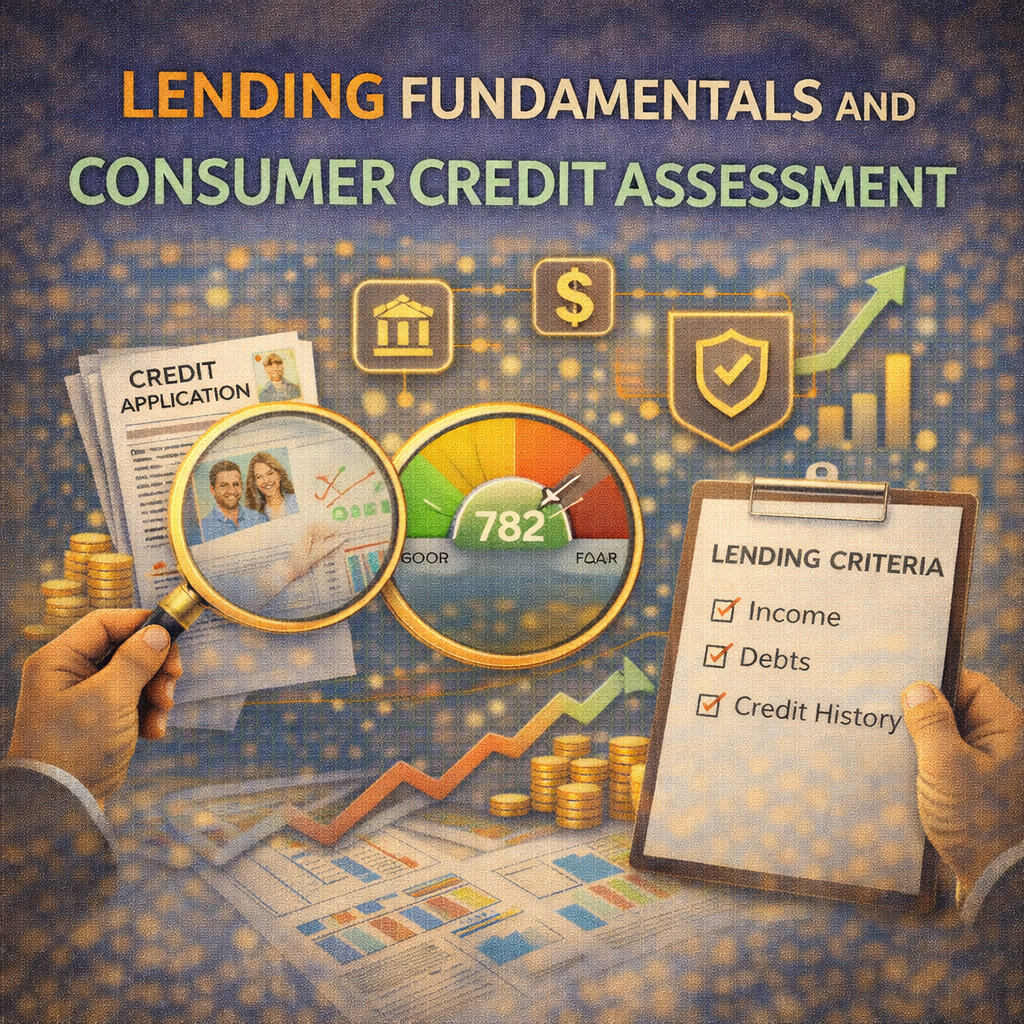
Lending is a core function of every financial institution and understanding how to assess creditworthiness is critical to minimizing risk and ensuring profitability. Many lenders focus on approving loans but overlook the importance of structured assessment, documentation, and monitoring, which often leads to defaults and losses.
This one-day programme is designed to provide participants with practical knowledge and skills in consumer credit assessment. It covers the fundamentals of lending, techniques for evaluating borrowers, managing risk, and making sound credit decisions. Participants will gain hands-on insights into how to assess loan applications effectively and strengthen their overall lending practices.
COURSE OBJECTIVES
By the end of this programme, participants will be able to:
• Understand the fundamentals of lending and credit principles
• Apply structured approaches to consumer credit assessment
• Evaluate borrower capacity, character, and collateral
• Identify and mitigate credit risk effectively
• Ensure proper documentation and compliance in credit processes
• Make informed and consistent credit decisions
COURSE OUTLINE
MODULE 1: INTRODUCTION TO LENDING
• Fundamentals of lending and credit principles
• Types of consumer loans
• Objectives of lending in financial institutions
• The role of credit in financial performance
• Common challenges in consumer lending
MODULE 2: UNDERSTANDING CREDIT RISK
• Key components of credit risk
• Factors that influence borrower risk
• Credit risk versus operational risk
• Risk identification and mitigation
• Impact of poor credit assessment on portfolios
MODULE 3: CONSUMER CREDIT ASSESSMENT TECHNIQUES
• Assessing borrower capacity and repayment ability
• Evaluating borrower character and credit history
• Analyzing income, expenses, and debt obligations
• Collateral assessment and valuation
• Using checklists and structured frameworks
MODULE 4: CREDIT APPROVAL AND DECISION-MAKING
• Segregation of duties in approval processes
• Avoiding bias and pressure-driven decisions
• Approval limits and authorities
• Maintaining consistency in decision-making
• Documentation and record-keeping best practices
MODULE 5: MONITORING AND CONTROLS
• Post-disbursement monitoring techniques
• Early warning indicators of default
• Exception handling and escalation
• Periodic review and portfolio health checks
• Strengthening administrative controls
MODULE 6: CASE STUDIES AND PRACTICAL EXERCISES
• Real-world consumer credit scenarios
• Hands-on exercises in borrower assessment
• Group discussions on credit decision challenges
• Lessons from past lending failures
• Action plans for improved credit practices
Course Details
- Duration: 1 days
-
Available Formats:
- Virtual Attendance - ₦54,000
- Physical Attendance - ₦69,000
-
Available Dates:
- Feb 12, 2026
- Jun 29, 2026
- Nov 29, 2026