Course Description
| Target Audience | Internal auditors, risk and compliance officers, finance and control managers, senior governance executives, and professionals. |
INTRODUCTION
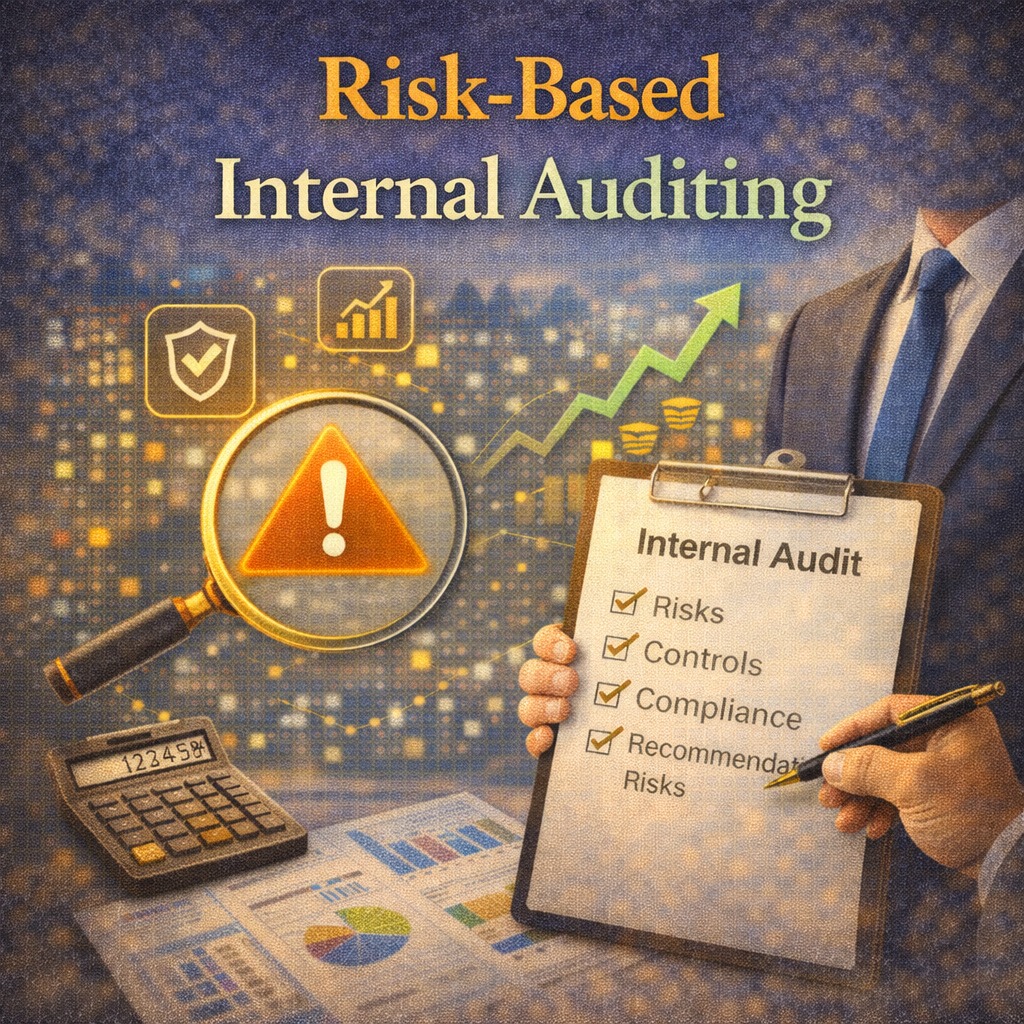
Risk-Based Internal Auditing (RBIA) is an advanced audit approach that ensures audit resources are directed toward the areas of greatest risk to achieving organizational objectives. For insurance companies, this methodology enhances governance, compliance, operational efficiency, and stakeholder confidence.
This 3-day intensive training equips participants with the knowledge, tools, and techniques needed to conduct audits that are risk-focused, strategically aligned, and value-adding.
COURSE OBJECTIVES
At the end of the course, participants will be able to:
- Understand the principles, framework, and regulatory expectations of Risk-Based Internal Auditing.
- Identify, assess, and prioritize risks within an insurance environment.
- Develop a risk-based internal audit plan that aligns with enterprise objectives and risk appetite.
- Apply effective techniques in planning, executing, and reporting risk-focused audit engagements.
- Communicate risk-driven audit findings that influence decision-making and add business value.
COURSE OUTLINE
Module 1: Fundamentals of Risk-Based Internal Auditing
- Evolution of internal auditing: from traditional to risk-based approaches
- Purpose and benefits of RBIA for insurance companies
- International frameworks and standards (IIA Standards, ISO 31000, regulatory requirements)
- Enterprise Risk Management (ERM) overview and its link to auditing
- Understanding the risk universe and audit universe
- Categories of risk: strategic, operational, compliance, financial, insurance-specific
Module 2: Risk Identification and Assessment
- Approaches to identifying risks in insurance organizations
- Risk assessment methodologies (qualitative vs. quantitative)
- Tools and techniques: risk matrices, heat maps, scoring models
- Sources of risk intelligence: data analytics, KRIs, interviews, and workshops
Ranking and prioritizing risks for audit planning
Module 3: Risk-Based Audit Planning
- Components of a risk-based audit plan
- Aligning audit objectives with organizational strategy and risk appetite
- Prioritizing audit engagements based on risk ratings
- Incorporating regulatory and compliance requirements into the audit plan
Resource allocation and scheduling for risk-based audits
Module 4: Conducting Risk-Based Audit Engagements
- Scoping and objectives of a risk-based audit
- Risk/control identification, testing, and evaluation
- Audit fieldwork techniques tailored for RBIA
- Audit documentation and working papers
Root cause analysis of control weaknesses
Module 5: Reporting and Communication of Findings
- Structuring audit reports with a risk-focus
- Communicating risk-based audit results to stakeholders
- Writing clear, impactful recommendations that add value
- Managing management responses and follow-up actions
Enhancing stakeholder confidence through risk-driven reporting
Module 6: Embedding RBIA into Practice
- Continuous monitoring of risks and controls
- Integrating RBIA with enterprise risk management (ERM)
- Leveraging technology and data analytics in RBIA
- The evolving role of internal auditors in governance and risk oversight
- Best practices and lessons learned from the insurance industry.
Course Details
- Duration: 3 days
-
Available Formats:
- Physical Attendance - ₦260,000
- Virtual Attendance - ₦220,000
-
Available Dates:
- Aug 17, 2026