Course Description
| Target Audience | Treasury and Finance Officers, Risk Management and Compliance Professionals, Accountants and Financial Controllers, Investment and Funding Managers, Bank and Financial Institution Staff, Corporate Finance and Strategy Professionals, Managers involved in financial decision-making. |
INTRODUCTION
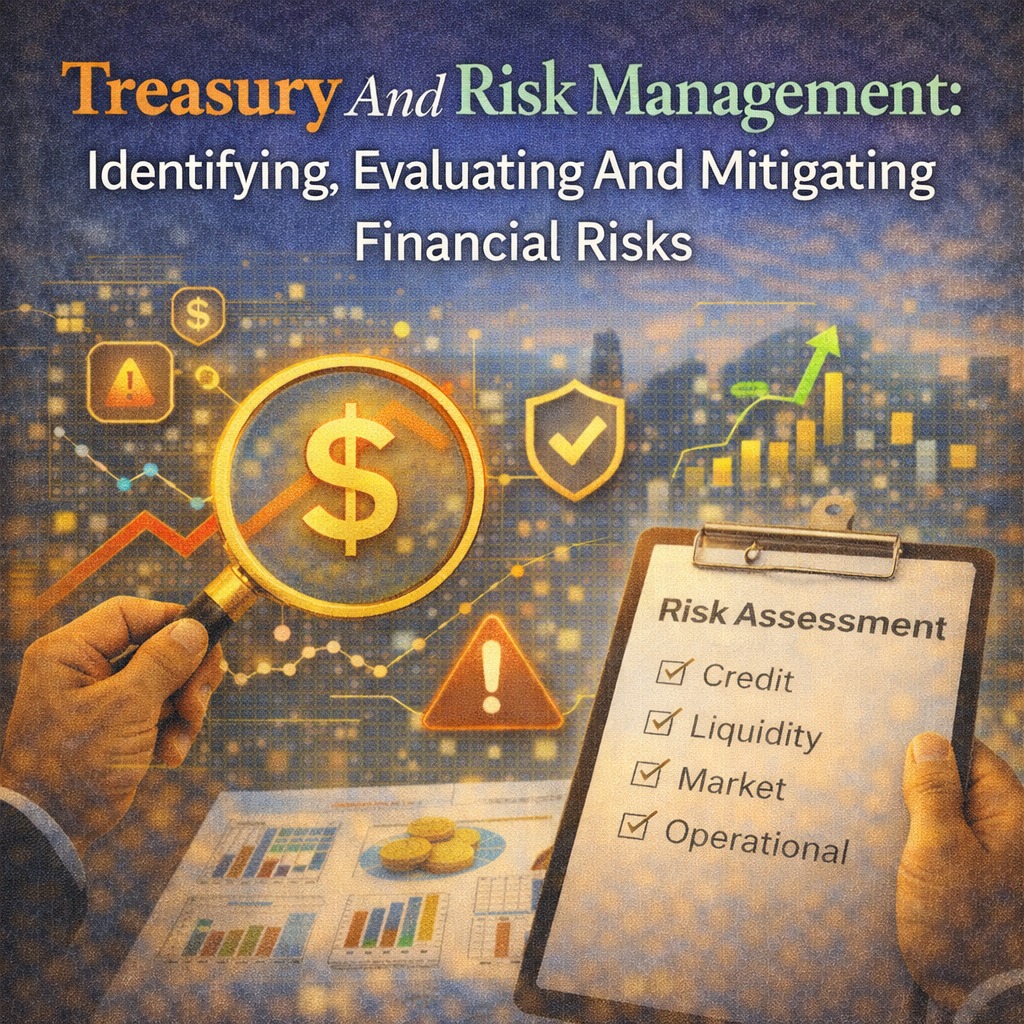
Treasury and risk management functions play a critical role in protecting an organization’s financial position. Daily decisions around cash flow, funding, investments, interest rates, and currency exposure can significantly affect stability, profitability, and long-term sustainability. When these risks are not clearly understood or properly managed, organizations are exposed to avoidable losses and liquidity pressure.
This two-day training is designed to strengthen participants’ understanding of financial risks from a treasury and risk management perspective. It focuses on how risks arise, how they can be assessed realistically, and how practical mitigation strategies can be applied within organizational limits. The training is built around real financial scenarios rather than theory, helping participants connect risk management concepts directly to treasury operations and decision-making.
COURSE OBJECTIVES
By the end of this training, participants will be able to:
- Understand the role of treasury in financial risk management
- Identify key financial risks affecting organizations
- Evaluate the impact of market, liquidity, and funding risks
- Apply practical tools for measuring financial risk exposure
- Develop appropriate risk mitigation strategies
Support informed treasury and financial decision-making
COURSE OUTLINE
Module 1: Overview of Treasury and Financial Risk Management
- The role of treasury in organizational stability
- Understanding financial risk in practical terms
- Relationship between risk, liquidity, and profitability
- Treasury responsibilities and risk ownership
Module 2: Identifying Financial Risks
- Market risk, liquidity risk, and funding risk
- Interest rate and foreign exchange exposures
- Credit and counterparty risks
- Operational risks within treasury activities
Module 3: Cash Flow and Liquidity Risk Management
- Understanding cash flow risk
- Managing short-term and long-term liquidity
- Liquidity forecasting and monitoring
- Managing liquidity under stress conditions
Module 4: Market Risk Assessment
- Interest rate risk and its impact
- Foreign exchange risk exposure
- Measuring market risk using practical tools
- Managing volatility and uncertainty
Module 5: Risk Policies, Limits, and Governance
- Treasury risk policies and frameworks
- Setting risk limits and controls
- Roles of management and oversight committees
- Reporting and accountability
Module 6: Funding and Refinancing Risk Management
- Understanding funding structures
- Managing refinancing and rollover risk
- Diversifying funding sources
- Managing relationships with lenders and investors
Module 7: Risk Mitigation Techniques and Instruments
- Hedging strategies and their practical use
- Use of derivatives and financial instruments
- Natural hedging and balance sheet strategies
- Evaluating costs and benefits of mitigation
Module 8: Stress Testing and Scenario Analysis
- Purpose of stress testing in treasury
- Designing realistic financial scenarios
- Assessing impact on cash flow and funding
- Using results to improve preparedness
Module 9: Treasury Risk Reporting and Decision Support
- Communicating risk clearly to management
- Interpreting risk reports and dashboards
- Supporting strategic and operational decisions
- Avoiding information overload
Module 10: Strengthening Treasury Risk Practices
- Reviewing existing treasury risk processes
- Identifying gaps and improvement areas
- Building a risk-aware treasury culture
- Developing a practical action plan
Course Details
- Duration: 2 days
-
Available Formats:
- Physical Attendance - ₦187,500
- Virtual Attendance - ₦165,000
-
Available Dates:
- Feb 16, 2026
- Jul 13, 2026